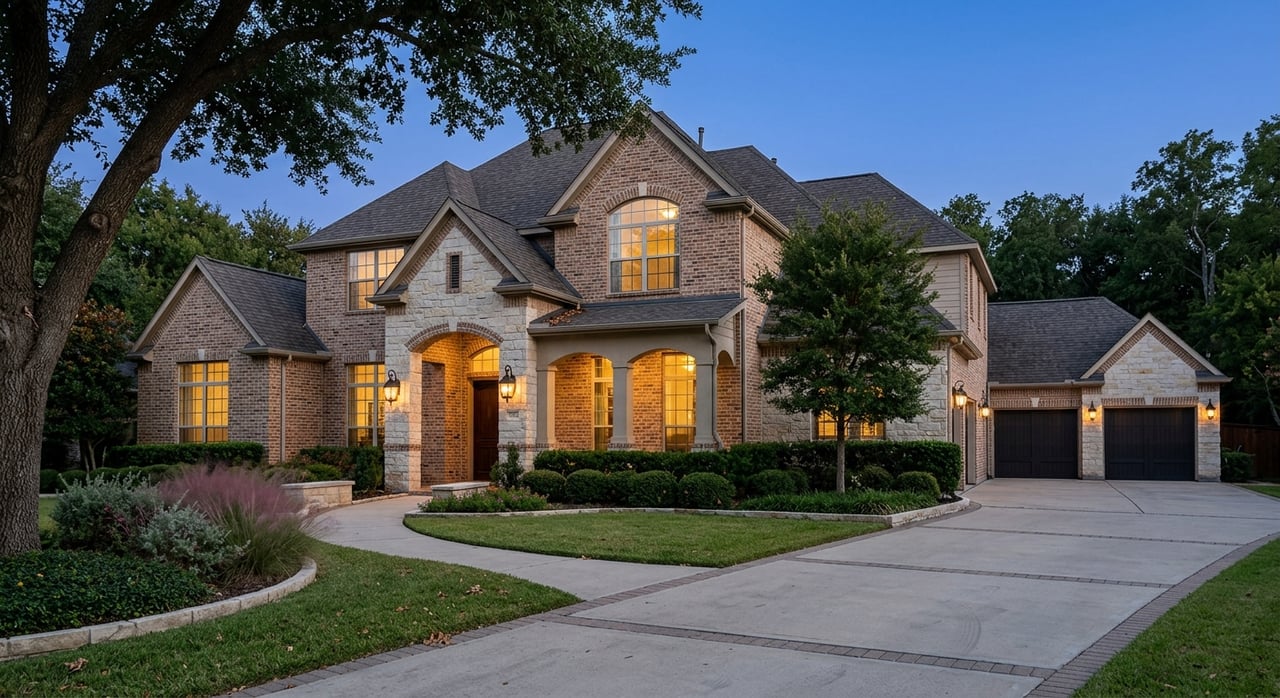
Trying to choose between Coppell and Flower Mound for your DFW commute? That decision can shape your daily routine, your home search, and how connected you feel to the rest of the Metroplex. If you want a suburb that fits both your lifestyle and your drive time, this side-by-side guide will help you compare commute patterns, transit options, school district structure, and overall neighborhood feel. Let’s dive in.
Commute Access Matters Most
If your top priority is getting around DFW efficiently, Coppell and Flower Mound offer two different commute experiences.
Coppell is the smaller and more airport-connected option. According to the City of Coppell, it sits in northwest Dallas County, covers about 14.71 square miles, and is bounded by Irving, Dallas, and DFW Airport. The city also highlights direct access to I-635 and Highway 121, which helps explain why many buyers see Coppell as a practical choice for commuting toward DFW Airport, Irving, Las Colinas, and nearby job hubs.
Flower Mound offers close airport access too, but the layout is different. The Town of Flower Mound says the town is about 45 square miles, 28 miles northwest of downtown Dallas, 25 miles northeast of Fort Worth, and three miles north of DFW Airport. That larger footprint gives you more neighborhood variety, but it also means your commute can vary a lot depending on which part of town you choose.
Coppell for Airport and Irving Commutes
If you work at DFW Airport or in Irving and Las Colinas, Coppell has a strong location advantage. The city’s official materials place it just four miles from DFW Airport and emphasize its quick highway access through major regional corridors like Highway 121 and I-635, as noted in the Coppell community profile.
That shorter distance matters in day-to-day life. Instead of a long suburban drive before you even reach a major highway, Coppell generally offers a more direct starting point for airport-adjacent commutes. For many buyers, that makes it feel less like a far-flung suburb and more like a well-positioned base inside the larger North Texas network.
There is one tradeoff worth knowing. The City of Coppell notes that the west side of the city lies under airport flight paths, so neighborhood location can affect your experience. If airport access is a major reason you are considering Coppell, it helps to weigh convenience against that airport-adjacent setting.
Flower Mound for More Space
Flower Mound can still work very well for airport commuters, especially on the southeast side of town. The town’s Lakeside Village page says that area is about 10 minutes from DFW Airport, which makes it one of the more convenient sections for buyers who want airport access without living quite as close to airport operations.
The bigger question in Flower Mound is where you plan to live. Because the town is much larger, commute times can differ more from one neighborhood to another. In general, Flower Mound functions as a more car-first suburb, with highways and major roads doing most of the heavy lifting for commuters.
For some buyers, that is a worthwhile trade. You may prefer a larger suburban setting, more spread between neighborhoods, and a more master-planned feel, even if the commute is a bit more highway-dependent overall.
Transit Options Are Limited
For households hoping to rely less on driving, Coppell has the stronger transit story, but neither suburb is truly transit-first.
DART announced that the Silver Line opened on October 25, 2025, creating a 26-mile regional rail connection that includes Coppell and DFW Airport Terminal B. That gives Coppell a real advantage for regional connectivity compared with many nearby suburbs.
Still, the improvement has limits. The Coppell Silver Line FAQ says there are no direct transit connecting points into Coppell from Cypress Waters or Terminal B, so many residents will still need to drive for the first and last mile.
Flower Mound’s transit options are more limited for everyday commuters. The town’s SPAN Transportation page explains that service is available for eligible seniors and residents with disabilities, with advance booking and weekday operating hours. For most working commuters, that means Flower Mound remains a driving-focused suburb.
If you plan to use airport rail connections often, DFW Airport’s public transit page shows the range of available services, including DART Orange Line to Terminal A, Silver Line to Terminal B, Trinity Metro TEXRail to Terminal B, and TRE to CentrePort/DFW Airport. That broader network makes Coppell’s rail access more meaningful, even if driving still plays a major role.
School Boundaries Need Attention
If schools are part of your search, the key takeaway is simple: district structure matters in both suburbs, and address-specific zoning is important.
Coppell is served by three public school systems: Carrollton-Farmers Branch ISD, Coppell ISD, and Lewisville ISD, according to the City of Coppell school page. The same source notes that Coppell ISD earned an A overall rating for 2024, while Lewisville ISD received a B overall rating for 2024 based on current TEA district summaries.
That often leads buyers to think of Coppell as a more single-district-centered market, even though zoning still depends on the specific address. If schools are one of your main filters, it is smart to confirm district boundaries early in your search rather than assume all Coppell homes feed into the same system.
Flower Mound has an even more mixed district map. The town’s School Resources page says Flower Mound is served mostly by Lewisville ISD and Argyle ISD, with smaller areas in Denton, Grapevine-Colleyville, and Northwest ISDs. The town also states that 17 elementary schools, 9 middle schools, and 6 high schools serve Flower Mound.
In practical terms, Flower Mound buyers often need to start with the address and then work backward to confirm district assignment. That makes school-boundary research a bigger part of the home search process there.
Neighborhood Feel Is Different
Beyond commute time, the bigger lifestyle question is how you want your suburb to feel.
Coppell is the more compact and established option. The city’s community experiences page says Coppell is only 14 square miles and maintains a small-town feel within a major metro area. It also describes Old Town Coppell as the original town site, with homes, businesses, restaurants, a walkable square, and the farmers market.
That creates a more mature, connected atmosphere. The same page also notes that Coppell is largely built out and that many residents want to downsize without leaving the city, which suggests a more established housing pattern and a tighter supply environment.
Flower Mound offers a different kind of appeal. According to the town’s Master Plan page, Flower Mound was designed to preserve its country atmosphere and natural environment while guiding orderly suburban growth. The town also highlights planned development patterns, major thoroughfares, and distinct areas such as Lakeside and Long Prairie.
For you, that may translate into more neighborhood variety and a more expansive suburban feel. If you want a larger town with more geographic spread and a broader range of settings, Flower Mound may feel like the better fit.
Quick Comparison at a Glance
| Factor | Coppell | Flower Mound |
|---|---|---|
| Size | About 14.71 square miles | About 45 square miles |
| Airport proximity | About 4 miles from DFW Airport | About 3 miles north of DFW Airport |
| Commute style | More compact, airport-oriented, easier for Irving and Las Colinas access | More spread out, more highway-dependent |
| Transit | Silver Line improves regional rail access | Limited everyday transit options |
| School structure | Often centered around Coppell ISD, but address-dependent | More mixed district map across multiple ISDs |
| Overall feel | Smaller, established, mature suburb | Larger, master-planned, more expansive suburb |
Which Suburb Fits You Best?
Choose Coppell if you want a compact suburb with stronger airport access, a better regional rail story, and a more established neighborhood feel. It can be an especially practical choice if your work pulls you toward DFW Airport, Irving, Las Colinas, or nearby employment corridors.
Choose Flower Mound if you want more space, more neighborhood variety, and a larger suburban footprint while still staying reasonably close to the airport. It may also appeal to you if you like a more planned, spread-out environment and do not mind relying more heavily on your car.
The right answer often comes down to your daily pattern. If your commute is frequent and location efficiency drives the decision, Coppell may be the stronger match. If you are balancing commute needs with a preference for a larger suburban setting, Flower Mound may offer more of what you want at home.
If you want help narrowing down neighborhoods, commute-friendly locations, or district-boundary considerations in North Texas, The Tomlin Team Real Estate Group can help you compare your options and move forward with confidence.
FAQs
Is Coppell or Flower Mound better for DFW Airport commuters?
- Coppell is generally the more airport-integrated option, while southeast Flower Mound can also be convenient, especially near Lakeside.
Does Coppell have better public transit than Flower Mound?
- Yes. Coppell benefits from the DART Silver Line connection to DFW Airport Terminal B, although most residents still need to drive for part of the trip.
Are Coppell and Flower Mound both car-dependent suburbs?
- Yes. Both suburbs are still largely car-dependent, but Flower Mound is generally more highway-driven overall.
How do school districts differ in Coppell and Flower Mound?
- Coppell is served by multiple districts but is often associated with Coppell ISD, while Flower Mound has a more mixed district structure that depends heavily on the address.
Is Flower Mound larger than Coppell?
- Yes. Flower Mound is about 45 square miles, while Coppell is about 14.71 square miles, so Flower Mound offers a more spread-out suburban layout.